



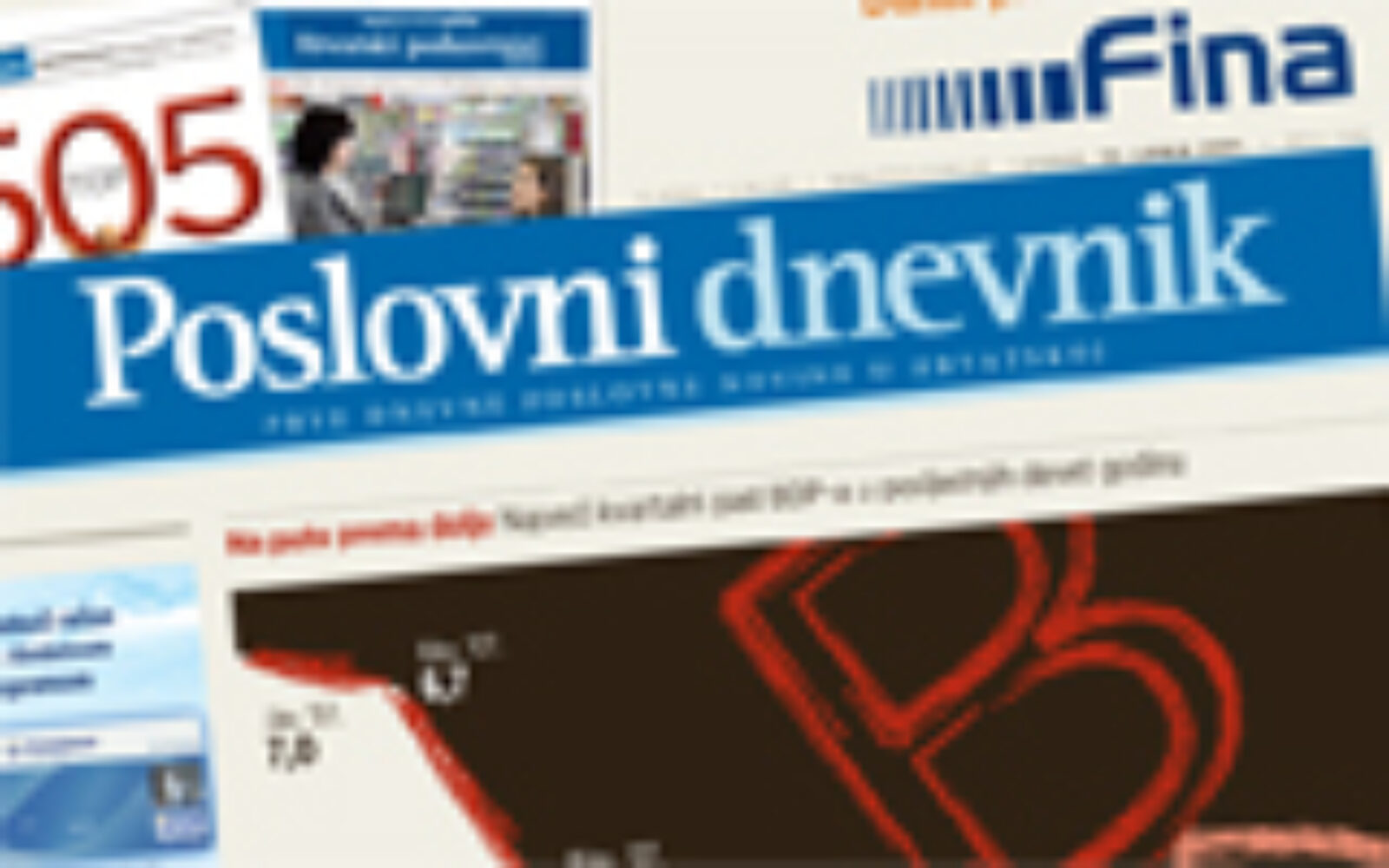
Biggest quarterly drop in GDP in the last nine years
For more information about AmCham please visit www.amcham.hr or call +385-1-4836-777
The substantial fall of the GDP (6.7%) in Q1 of 2009, compared to 2008, did not surprise most analysts, even though this is the biggest quarterly fall in the last nine years. All of the other economic indicators, such as industrial production, investment and especially trade, pointed to a significant drop.
The drop of 15% in trade was a real indicator of the significant drop in personal consumption that composed the largest share in the GDP decrease. Personal consumption dropped by 9.9% in comparison to Q1 of 2008. While the Croatian GDP drop of 6,7% in comparison to the other countries usually named as Croatian counterparts is average, its personal consumption statistics are among the lowest. Although the decrease in investments in the first three months has realistically decreased 12%, we cannot consider this to be drastic, since other countries have recorded drops of up to 30%. The influence of the crisis in Q1 was greatly attributed to the finalization of infrastructure projects initiated during the local elections. In spite of the decrease in revenue from taxes, the expenditures of the state increased, which in turn is the only component of the GDP that noted an increase in comparison to 2008. The GDP decrease was mitigated by net exports, as a consequence of the decreased import of goods and services.“The GDP drop in itself is not such a problematic issue as is its reflection on the budget and the situation of the public finances which is very difficult,” says Željko Lovrinčević, economic analyst from the Institute of Economics. Lovrinčević reminded that the growth of state expenditures is financed through increased debt, which consequently lowered the private sector funding. With it’s announcement of the rebalancing of the state budget to occur “in two weeks or in September”, Minister Ivan Šuker confirmed the inability to sustain the current situation of public finances. According to him, the ”revenue side of the budget does not concern us and Government is not thinking about increasing VAT, but expenditures have to be cut or the deficit has to be increased.” This will depend upon the availability and conditions of new financing. Most analysts feel the only solution is the adjustment expenditures and the Government should not rely on increasing the deficit.
The Croatian National Bank (HNB) considers the quarterly GDP drop to be a warning to make adjustments to fiscal policy. According to the Governor of HNB, Mr. Željko Rohatinski, the GDP decrease in Q1 may be somewhat larger than expected but it is a clear sign of this year’s limitations, such as the decrease in exports, reduced foreign investments and significant decrease in capital inflow. He added that the HNB will lower their predictions, but this will not have a significant influence on their opinion regarding the general monetary and the economic policies. The HNB thinks that it is still necessary to reduce the deficit significantly from the 9.4% 2008 level to 6%, but there is a difference if it will happen spontaneously (uncontrolled) or as a result of economic policy. “We cannot influence there being a budget rebalance, but we have always claimed that the monetary policy has done all it can under current circumstances. During the remainder of the year, we will surely not lead a lax monetary policy that would increase the amount of currency on the market and reducing currency reserves,” concluded Rohatinski.Predictions for further GDP drops in 2009 are nearing 5% and sources tell us that the HNB predictions are also close to that level. In Q2 and through the end of the year, Lovrinčević expects a reduction of the stagnation rate. For the Q2, he predicts a fall of 4-4.5%, attributed to lower trade stagnation rated. The expected withdrawal of the state from large projects (i.e. infrastructure projects) is expected to positively influence the statistics.

Važna obavijest:
Sukladno članku 94. Zakona o elektroničkim medijima, komentiranje članaka na web portalu Poslovni.hr dopušteno je samo registriranim korisnicima. Svaki korisnik koji želi komentirati članke obvezan je prethodno se upoznati s Pravilima komentiranja na web portalu Poslovni.hr te sa zabranama propisanim stavkom 2. članka 94. Zakona.Uključite se u raspravu